MIB Add'l Secy Prabhat calls for greater accountability in India’s creator economy
At the FICCI event, the MIB Additional Secretary said virality does not necessarily translate into intellectual property ownership or long-term economic value
 by
by
Published: Sep 29, 2026 11:45 AM | 4 min read
 Follow Us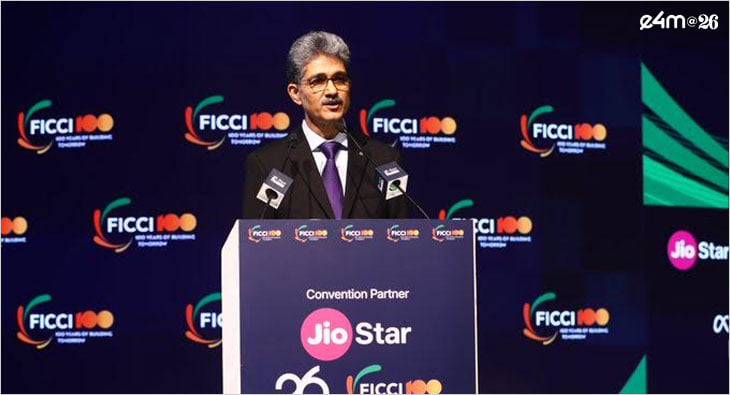

- Prabhat, Additional Secretary of the Ministry of Information & Broadcasting, emphasized the need for greater accountability in the digital media ecosystem, addressing concerns over harmful content and the effects of engagement-driven recommendation systems at a FICCI event in Mumbai.
- He highlighted the importance of transitioning from metrics like followers and views to focusing on building sustainable businesses around original intellectual property in India's growing creator economy.
- Prabhat called for collaboration among government, digital platforms, and advertisers to ensure responsible recommendation systems, child safety, and fair economic opportunities for content creators, while also stressing the need for stronger protections against piracy.
- The Ministry's WAVES initiatives aim to support talent discovery and strengthen capabilities in various creative sectors, with a focus on creating a sustainable ecosystem that fosters original Indian intellectual property and connects creators to global markets.
Prabhat, Additional Secretary, Ministry of Information & Broadcasting, Government of India, has called for greater accountability across the digital media ecosystem, flagging concerns over obscene and harmful content, the impact of engagement-driven recommendation systems and the need to create sustainable businesses in India’s growing creator economy.
Speaking at the FICCI event India’s Media Moment: Creating Value in an Age of Infinite Content in Mumbai on Tuesday, Prabhat said India’s next phase of media and entertainment growth must focus on building intellectual property, supporting creator-led enterprises and ensuring that the economic value generated by digital content translates into long-term ownership and sustainable businesses.
“There are concerns around obscene and harmful content, particularly when recommendation systems optimise primarily for engagement,” he said, adding that the design of digital media platforms also required greater attention.
Prabhat pointed to features such as infinite scroll, auto-play and continuously optimised recommendations, noting that their impact on users, particularly children and younger audiences, deserved serious consideration.
Virality does not guarantee ownership
Highlighting the distinction between audience reach and economic sustainability, Prabhat said India had demonstrated its ability to produce content at scale, but the next stage needed to focus on value creation and retention.
“A creator with millions of followers may have enormous reach, but reach alone does not necessarily create a sustainable enterprise. Similarly, virality does not necessarily translate into ownership of intellectual property or long-term economic value,” he said.
He said the industry needed to move beyond metrics such as followers and views towards building businesses around original intellectual property, while expanding the global reach of Indian creative content.
“The next phase therefore has to move from followers to enterprises, from views to value, from production services to intellectual property and from domestic scale to global markets,” Prabhat said.
Calls for accountability in digital advertising
Prabhat said the responsibility for building a sustainable creative economy extended beyond the government to digital platforms, advertisers and other industry stakeholders.
“We also need the industry and platforms to work together on responsible recommendation systems, greater accountability, child safety, transparency in digital advertising and fair economic opportunities for those who create the content on which the ecosystem ultimately depends,” he said.
“These cannot be government responsibilities alone. A mature creative economy requires responsibility across the entire value chain,” he added.
His remarks also highlighted the need for stronger protection against piracy and content theft, alongside greater investment in original Indian intellectual property.
“The Ministry is conscious that we need stronger protection against piracy and content theft because creativity cannot become a sustainable economic activity unless intellectual property has value,” he said.
Ministry’s push to build a creator ecosystem
Prabhat outlined initiatives under the Ministry’s WAVES ecosystem, aimed at identifying talent, strengthening capabilities and connecting creators with markets.
He said the Create in India challenges were intended to identify talent across filmmaking, music, animation, gaming, visual effects, extended reality and digital storytelling.
He also highlighted the role of ISCT in strengthening skills, research and capabilities in AVGC, XR and emerging creative technologies, while WaveX seeks to build a startup and innovation ecosystem.
Waves Bazaar, he said, connects creators and companies with buyers, investors and international markets and is now designed as a year-round marketplace rather than an event associated with a summit.
Prabhat also cited initiatives such as MyWaves and Creators Corner on DD News, which seek to provide emerging creators with greater opportunities for participation and visibility.
Industry investment and talent discovery
Prabhat said the government could create institutions, policy frameworks, platforms and international linkages, but the creative economy would ultimately be built by creators and industry.
He called for greater investment in original Indian intellectual property and support for emerging writers, musicians, animators and game developers.
He also stressed the need to discover talent beyond established industry networks, across Indian languages, states and smaller cities.
Referring to the Prime Minister’s formulation at WAVES, Prabhat said: “Create in India, create for the world.”
He added: “Create in India, create for the world and create enduring value. That to my mind is the real promise of India's media movement.”
Read more news about Digital Media, Television Media, Out of Home Advertising, Print Media, Latest Advertising India
For more updates, be socially connected with us onInstagram, LinkedIn, Twitter, Facebook, YouTube & Google News
